Few foods spark as many fierce arguments as pizza. Most people obsess over the crisp of the crust or the stretch of the cheese, but it is the sauce that actually dictates the success of the pie.
A good sauce keeps the crust crisp. Too much sauce, or the wrong kind, just makes the whole thing soggy before the cheese can even brown.
Every great pizza relies on the same core blueprint: dough, sauce, cheese, and toppings.
While mozzarella is the gold standard, and toppings can range from classic pepperoni to controversial pineapples, the sauce acts as the crucial foundation holding it all together.
Because it lives beneath the surface, knowing the exact difference between a dedicated pizza sauce and a standard marinara will completely change how your next homemade pie turns out.
What Is the Difference Between Pizza Sauce and Marinara?
Marinara is a specific tomato sauce, usually cooked and served with pasta, seafood, meatballs, or as a dipping sauce. Pizza sauce is broader. It can refer to almost any sauce spread over pizza dough, although most people use the term for a tomato-based sauce.
The main difference comes down to texture, cooking time, and purpose. Marinara is usually cooked until the tomatoes break down and the sauce becomes thicker and more developed. Pizza sauce is often left raw or only briefly cooked because it continues cooking in the oven on top of the dough.
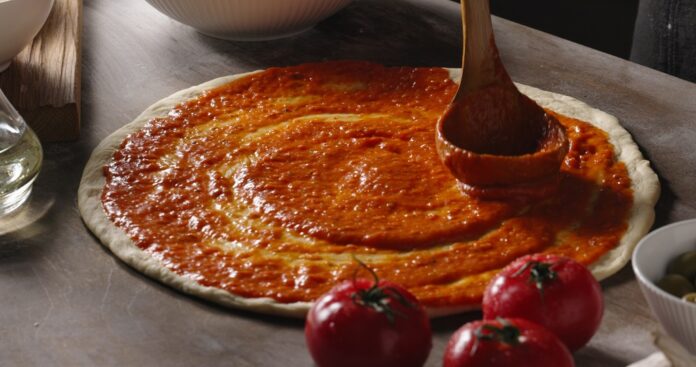
Marinara usually has a fuller flavor because it spends more time in the pan with garlic, olive oil, herbs, and tomatoes. Pizza sauce needs to be simpler and more controlled. It has to sit under cheese and toppings without stealing attention or soaking the crust.
Traditional pizza sauce was often little more than crushed or ground tomatoes with salt, olive oil, and a small amount of seasoning. The oven did the cooking. Today, many cooks use cooked pizza sauce, especially for thicker styles of pizza or home ovens that do not reach the heat of a professional pizza oven.
Marinara and pizza sauce can be swapped in some situations, but they do not behave the same way. Marinara on pizza gives a richer, more cooked tomato flavor. Pizza sauce on pasta can taste thin unless it is reduced and seasoned more heavily.
The Origin of Pizza and Pizza Sauce
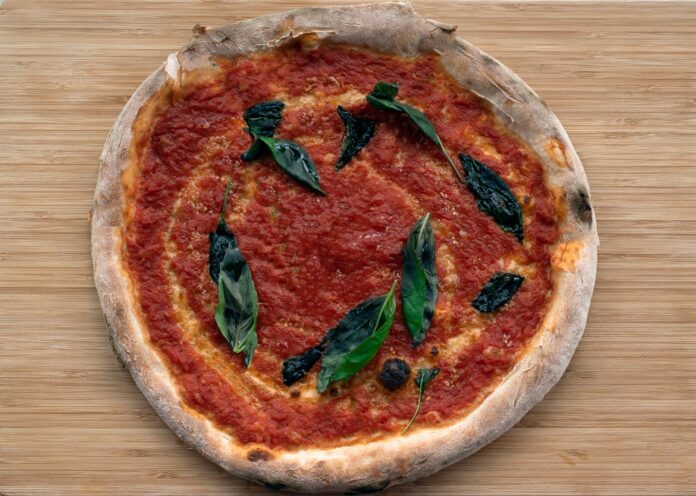
Pizza as we know it is closely tied to Naples. In June 1889, Neapolitan chef Raffaele Esposito prepared a tomato-based pizza for Queen Margherita of Savoy. The pizza was topped with tomatoes, mozzarella, and basil, ingredients that matched the colors of the Italian flag. That style became known as Margarita.
Tomato sauce became a natural partner for pizza because it brought acidity, moisture, and sweetness to a simple dough. In Naples, where pizza developed as an affordable street food, the sauce had to be quick, practical, and full of flavor without expensive ingredients.
The Origin of Marinara Sauce
Tomato sauces vary from kitchen to kitchen, and marinara is no exception.
One cook may use onion, another may leave it out. One may add oregano, another may prefer basil. The basic idea stays the same: tomatoes, olive oil, garlic, herbs, and enough cooking time to bring everything together.
Like many Italian classics, marinara has roots in Naples. Tomato sauce could not exist in Italy before tomatoes arrived in Europe after the Spanish brought them from the Americas in the 16th century. Italian cooks adopted tomatoes gradually, then built a whole cuisine around them.
One of the Italian chefs, Antonio Latini, published an early tomato sauce recipe in his cookbook, helping move tomatoes from curiosity to kitchen staple.
The word marinara is often linked to sailors and coastal cooking. A simple Italian-style marinara usually includes olive oil, garlic, tomatoes, herbs, and sometimes onion. Canned tomatoes are often better than fresh tomatoes for sauce because they are picked and packed at a ripe stage, with steady sweetness and acidity.
Simple Marinara Sauce Recipe
Ingredients:
- 6 tablespoons of extra virgin olive oil
- 1 chopped medium onion
- 4 garlic cloves, crushed
- 2 teaspoons dried oregano, basil, or thyme
- 1 large can of Italian tomatoes
- 1 teaspoon of sugar, if needed
- Salt and pepper to taste
Method
Warm the olive oil in a saucepan over medium heat. Add the onion and garlic, then cook for about two minutes, until the onion softens and the garlic smells fragrant. Add the dried herbs, tomatoes, and sugar. Bring the sauce to a gentle boil, then lower the heat and simmer for about 30 minutes, stirring from time to time. Season with salt and pepper at the end.
Pizza Sauce Recipe
Ingredients:
- 4 tablespoons of extra virgin olive oil
- 3 garlic cloves, crushed
- 1 large can of Italian tomatoes
- 1 teaspoon of sugar, if needed
- Oregano, basil, or another herb you like
- Salt and pepper to taste
Method
Heat the olive oil in a saucepan. Add the garlic and cook briefly, just until fragrant. Add the tomatoes, herbs, sugar, salt, and pepper. Bring the sauce to a simmer and cook for about 10 minutes. For a smoother pizza sauce, blend it lightly. For a more rustic pizza, crush the tomatoes by hand and keep some texture.
Can You Replace Marinara with Pizza Sauce (or Vice Versa)?
When you cook Italian food at home, sauce substitutions happen. You may start pasta and realize the marinara is gone. You may roll out pizza dough and find only a jar of pasta sauce in the fridge. In many kitchens, that is where the debate starts.
Marinara and pizza sauce share the same tomato base, so one can be adjusted into the other. The result depends on texture and seasoning. A sauce that works over spaghetti may be too wet for pizza. A sauce made for pizza may taste too plain over pasta unless it is cooked longer and seasoned more fully.
The Similarities Between Pizza Sauce and Marinara
Pizza sauce and marinara look similar because both are usually tomato-based. They also rely on many of the same ingredients: tomatoes, olive oil, garlic, herbs, salt, and pepper.
Both sauces can be smooth or rustic. Both can be made with canned tomatoes. Both can work with mozzarella, basil, Parmesan, and plenty of classic Italian dishes. That overlap explains why home cooks swap them so often.
The Differences Between Pizza Sauce and Marinara
The biggest differences are simple:
- consistency
- flavor
- cooking process
Marinara is usually thicker and more developed because it is cooked before serving. It can have small tomato pieces, softened onion, garlic, and herbs. Since it is served with pasta or as a sauce on the side, it can carry more flavor on its own.
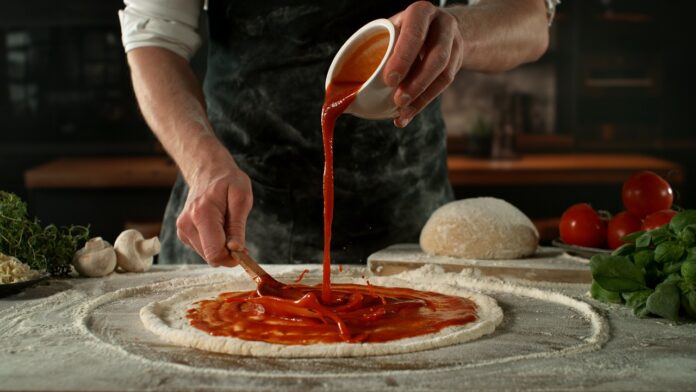
Pizza sauce has a different job. It needs to spread easily over dough, sit under cheese, and cook in the oven without making the crust soggy. For that reason, pizza sauce is often simpler, smoother, and less reduced than marinara.
Substitution is possible, but the sauce should be adjusted first. Marinara may need thinning or blending for pizza. Pizza sauce may need simmering and extra seasoning for pasta.
The Italian Way
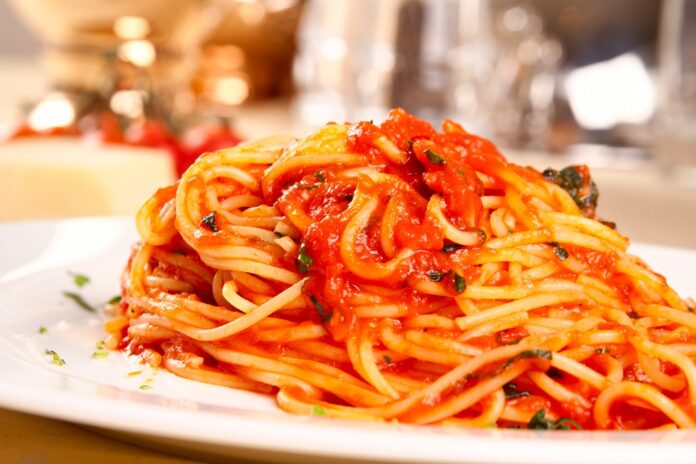
In many Italian kitchens, the difference is less dramatic than people make it sound. A basic tomato sauce, often called sugo, can become several things depending on how it is finished.
For pizza, the sauce may be kept lighter and spread thinly. For spaghetti or other pasta, the same tomato base can be cooked longer, enriched with herbs, or finished with pasta water. The point is practical cooking, not strict labels.
Italian food often works that way. A good base sauce gives you room to adjust texture, seasoning, and use.
From Pizza Sauce to Marinara
To turn pizza sauce into marinara, cook it longer. A low simmer removes extra water and gives the tomatoes a richer flavor. Add garlic, basil, oregano, onion, celery, or bay leaf if the sauce tastes too plain. For a classic version, see this guide to making marinara.
Keep stirring as the sauce reduces. Once it coats the back of a spoon and tastes rounded rather than sharp, it is ready for pasta.
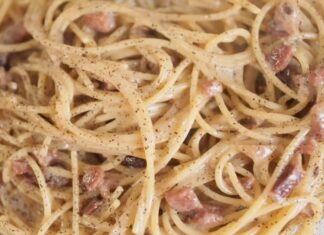
You can also finish almost cooked spaghetti directly in the sauce. The pasta releases starch, the sauce tightens, and the two come together better than they would if mixed at the end.
From Marinara to Pizza Sauce
Turning marinara into pizza sauce is usually easier. Blend it if the texture is too chunky, then simmer it briefly if it feels watery. For a thicker sauce, add a small spoonful of tomato paste. For a lighter sauce, loosen it with crushed tomatoes or a small amount of tomato juice.
Use less sauce than you think. A heavy layer of marinara can make pizza soggy, especially in a home oven.
Can You Use Spaghetti Sauce as Pizza Sauce?
You can use spaghetti sauce as pizza sauce, but it usually needs a small adjustment. If the sauce is thin, simmer it until thicker. If it contains large vegetable pieces, blend it or chop the pieces smaller. If it tastes too sweet for pizza, add salt, oregano, garlic, or a little olive oil to bring it back into balance.
Pizza Sauce vs. Spaghetti Sauce
Pizza sauce and spaghetti sauce are both tomato-based, but they are designed for different cooking conditions. Pizza sauce sits on dough and bakes under high heat. Spaghetti sauce coats cooked pasta and usually spends more time simmering in a pan.
@homewithhannah89 Spaghetti sauce, pizza sauce, marinara sauce, what’s the difference? #italian #sauce #pizza #spaghetti #pasta #fypシ ♬ Cheerful accordion waltz in Italian style(1418974) – harryfaoki
- Pizza sauce is usually thicker than many spaghetti sauces because it needs to stay on the dough.
- Pizza sauce often has oregano, garlic, chili flakes, or other bold seasonings that can stand up to cheese and toppings.
- Pizza sauce may include grated Parmesan, while pasta sauce may use cheese at the end or allow it to melt into the finished dish.
- Pizza sauce can taste slightly sweeter, especially when sugar is added to soften tomato acidity.
- Pasta sauce can have more layered flavor from longer cooking, onion, carrot, celery, peppers, or caramelized vegetables.
- Pizza sauce is often added to the pizza before it has been fully cooked, while spaghetti sauce is usually cooked before serving.
The closest pasta sauce to a classic pizza sauce is marinara, which is why the two are so often confused. Some pizzerias also serve marinara as a dipping sauce for crusts or offer it as a topping sauce.
Which Sauce Is Best for Pizza?
Tomato sauce is the classic choice for pizza because it balances cheese, dough, and toppings. Still, pizza does not have to be limited to tomatoes. White sauce, pesto, garlic oil, and cheese-based sauces can all work when the toppings are chosen carefully.
For a simple alternative, white sauce is one of the easiest options.
White Sauce
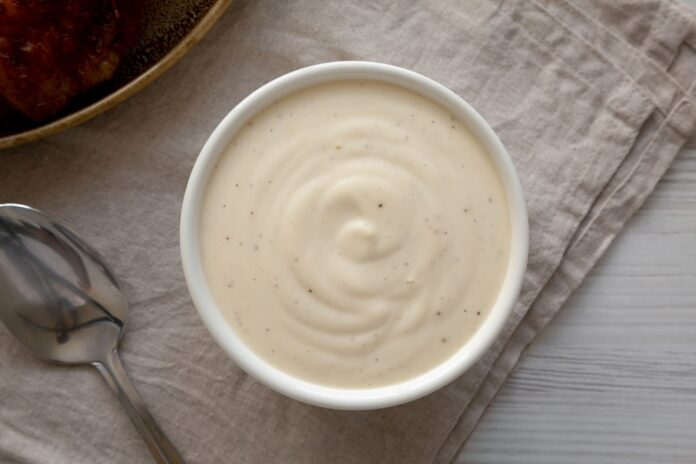
White sauce is usually made with milk, Parmesan, onion, garlic, butter, flour, herbs, salt, and pepper. Cream can replace milk for a richer version. Flour is mainly used for thickening, so it can be reduced or skipped when using cream.
White sauce works well with mushrooms, chicken, spinach, onions, mild cheeses, and herbs. Since it is richer than tomato sauce, a thin layer is enough.
The Best Cheese for Pizza
Cheese gives pizza its melt, texture, and much of its flavor. Mozzarella is the classic choice, but blue cheese, Parmesan, provolone, and other cheeses can work when used in the right amount.
For pizza, avoid cheeses that release too much fat or water during baking. Too much fat can leave the surface oily, while too much moisture can soften the crust. Cold cheese is easier to grate, slice, and scatter evenly. For a 30 cm pizza, around 150 g of cheese is usually enough.
Mozzarella
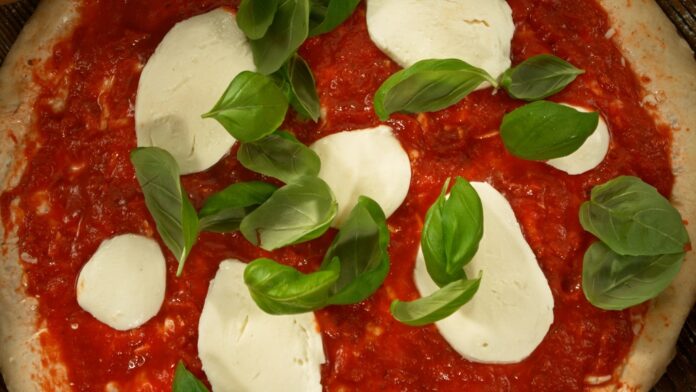
Mozzarella is the classic Italian pizza cheese. Buffalo mozzarella is especially prized for its rich flavor, while cow milk mozzarella is more common and easier to find.
Fresh mozzarella can release water during baking, which may leave the dough soft. To avoid that, slice it and pat it with kitchen paper before using. You can also let it drain in a sieve for a short time. Low-moisture mozzarella gives a drier, more even melt, which is useful for home ovens.
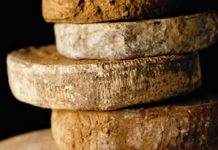
Noble Mold Cheese
Blue cheeses such as Gorgonzola or Roquefort can work beautifully on pizza, especially with fresh vegetables, rocket, cherry tomatoes, pears, walnuts, or mild mozzarella. Their flavor is bold, so a small amount is enough.
Blue cheese also works well on white pizzas without tomato sauce. It can be added to béchamel or scattered over the pizza before baking. The best result usually comes from using it as an accent rather than the main cheese.
Pizza sauce and marinara are close relatives, but they are not identical. Marinara is usually cooked, thicker, and more complete on its own. Pizza sauce is usually simpler and built to bake on dough. Once you understand that difference, swapping one for the other becomes easy.
FAQs
Conclusion
Pizza sauce and marinara come from the same tomato family, but they have different jobs in the kitchen. Marinara is usually cooked longer, thicker, and more complete as a sauce for pasta or dipping. Pizza sauce needs to spread easily, bake well, and support the crust, cheese, and toppings without taking over.
When you understand the difference, you do not need to treat the two sauces as strict opposites. A thin pizza sauce can become marinara with more cooking and seasoning. A thick marinara can become pizza sauce with a smoother texture and a lighter hand on the dough. The best choice depends on the dish in front of you.
Enjoy your pizza!