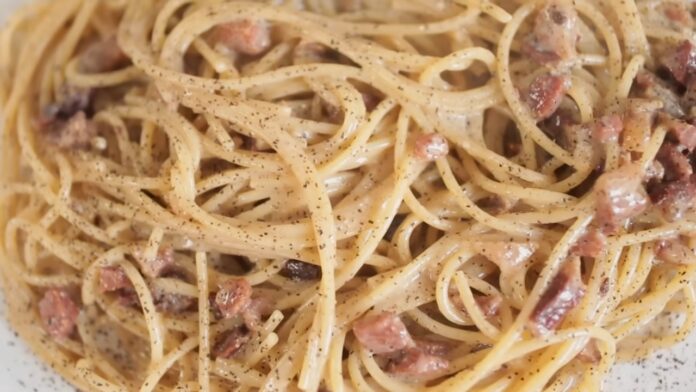
I include a recipe for this well-known dish because most people I know get it completely wrong, either adding milk or cream or letting the eggs become scrambled. This recipe is the real thing, according to powerliftingbelts.org.
It was brought to Lazio from Umbria by coal men (carbonari), who came to sell charcoal to the Romans. Since then, it has been adopted by the Romans and is famous worldwide.
If you are looking for a review of a quality pasta maker machine to serve the best carbonara Italian pasta dish, then visit Gentlehut.com to go through the reviews for your best pick.
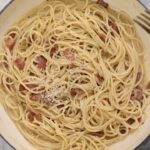
Spaghetti Carbonara with Eggs and Bacon
Spaghetti Carbonara is a classic Italian pasta dish celebrated for its silky egg-and-cheese sauce, crisp cured pork and generous amount of freshly ground black pepper.
Ingredients
- 220 g spaghetti or spaghettoni
- 25 g guanciale, pancetta or thick-cut bacon, cut into small cubes
- 2 tbsp olive oil
- 2 large eggs
- 50 g freshly grated Parmesan cheese or aged Pecorino Romano
- ½ tsp freshly ground black pepper, plus more for serving
- Salt, for the pasta water
- 60–120 ml reserved pasta cooking water, as needed
Instructions
-
Prepare the ingredients and egg mixture
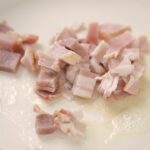
Cut the guanciale, pancetta or bacon into small cubes. Finely grate the Parmesan or Pecorino Romano.
Crack the eggs into a large heatproof bowl, add the grated cheese and freshly ground black pepper, then beat lightly until well combined.

-
Cook the pasta
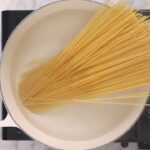
Bring a large saucepan of lightly salted water to a rolling boil. Add the spaghetti and cook until al dente, stirring occasionally.
Before draining, reserve at least 120 ml of the starchy pasta water.
-
Cook the guanciale or bacon
While the pasta cooks, heat the olive oil in a large frying pan over medium heat.
Add the diced guanciale, pancetta or bacon and cook for 4–6 minutes, stirring occasionally, until golden and crisp.
-
Combine the pasta and sauce
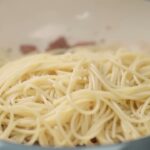
Drain the spaghetti and immediately add it to the frying pan. Toss well with the crisp pork and rendered fat.
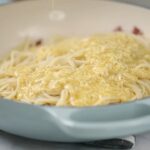
Remove the pan from the heat and let it cool for about 30 seconds, then add the egg-and-cheese mixture and toss continuously.
-
Adjust and serve
Add the reserved pasta water one tablespoon at a time, tossing until the sauce is smooth, glossy and creamy.
Divide between two warm bowls, finish with extra grated cheese and black pepper, and serve immediately.

Recipe Video
Recipe Notes
- Remove the pan from the heat before adding the eggs to prevent scrambling.
- Add pasta water slowly until the sauce is smooth and creamy.
- Finely grate the cheese so it melts easily.
- Toss the pasta quickly while it is still hot.
- Use less salt because the pork and cheese are already salty.
- Guanciale gives the most traditional flavour, while bacon adds a smoky taste.
- If the sauce is too thick, add a splash of pasta water.
- If the sauce is too thin, toss it for a few more seconds.
- Use pasteurised eggs when needed for extra food safety.
Spaghetti Carbonara Variations
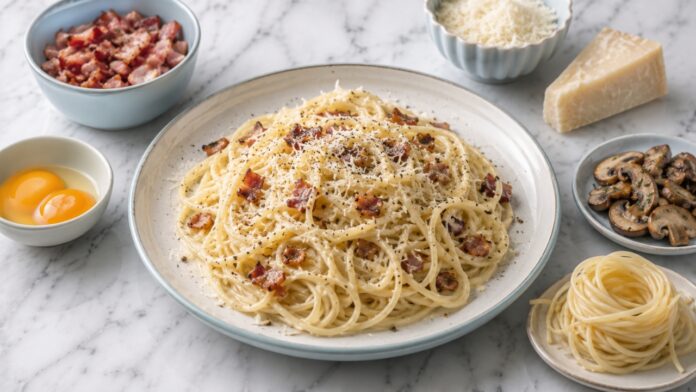
Classic carbonara relies on pasta, eggs, cured pork, hard cheese and black pepper. Small swaps can change the flavour and texture without extra work.
Guanciale, Pancetta or Bacon
Guanciale gives the richest and most traditional result. Its fat melts slowly and helps create a smooth sauce.
Pancetta offers a milder taste. Choose an unsmoked type for a result close to the Roman version.
Bacon works well when other options are hard to find. Its smoky and salty flavour will be more pronounced, so add less salt to the pasta water.
Pork choice
Flavour
Best for
Guanciale
Rich and savoury
Classic Roman carbonara
Pancetta
Mild and meaty
A close substitute
Bacon
Smoky and salty
A simple home version
Start the pork in a cool pan over medium-low heat. Slow heat helps the fat melt before the edges become crisp. Keep the fat in the pan because it forms part of the sauce.
Pecorino Romano or Parmesan
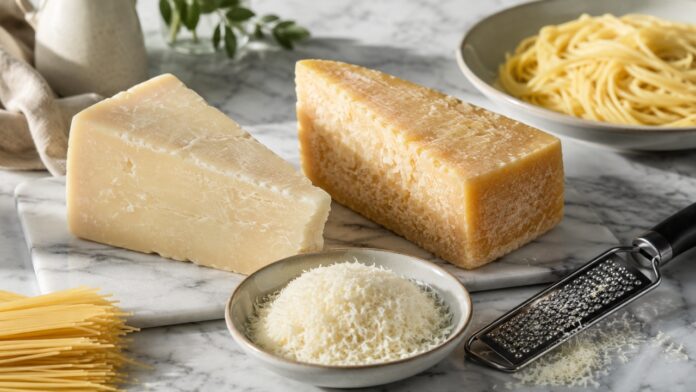
Pecorino Romano has a sharp and salty taste. Parmesan feels milder and has a subtle nutty note.
A half-and-half mix offers a balanced result. For two portions, combine about 25 grams of each cheese.
Grate the cheese very finely. Small flakes melt fast and reduce the risk of a grainy sauce. Pre-grated cheese may stay dry or form small lumps.
Whole Eggs or Extra Yolks
Whole eggs create a lighter sauce. Extra yolks add a deeper colour and richer texture.
Remove the pan from direct heat before the egg mixture goes in. Toss the pasta at once. Add reserved pasta water one spoon at a time until the sauce looks smooth and glossy. For a meat-free version, use mushrooms with dark golden edges. A small pinch of smoked paprika can add depth. Toasted walnuts can add a crisp texture. Keep the egg and cheese sauce unchanged. Remove the pan from heat before the sauce goes in. Choose gluten-free pasta made with rice and corn for a texture close to regular spaghetti. Check the pasta early because gluten-free types may soften fast. Keep extra pasta water aside. Add it in small amounts because its starch level may differ. A good spaghetti alla carbonara depends on heat control and fast work. Remove the pan from direct heat before the eggs go in. Grate the cheese finely. Add pasta water little by little. Guanciale and Pecorino Romano give the most traditional flavour. Pancetta, bacon and Parmesan offer practical alternatives. Extra yolks create a richer sauce. Whole eggs keep it lighter. Serve carbonara at once with more cheese and black pepper. The sauce thickens quickly after it leaves the pan.
Vegetarian Carbonara-Style Pasta
Gluten-Free Carbonara
Conclusion