Crafting a delicious sauce from scratch is a timeless tradition cherished in kitchens around the world. This simple recipe has been passed down through generations, becoming a staple for many home cooks. Unlike store-bought varieties, which often contain unnecessary additives, homemade sauce allows for a fresh and authentic flavor.
In just 15 minutes, you can prepare a delightful sauce that complements your favorite pasta dishes. The key to success lies in selecting high-quality ingredients, such as ripe tomatoes and fragrant basil. These elements ensure that your final dish is bursting with flavor.
This guide will walk you through each step, from ingredient selection to cooking techniques. You’ll learn how to avoid common misconceptions, like the differences between various sauce types. By following the instructions closely, even novice cooks can achieve a rewarding culinary experience.

Understanding Italian Tomato Sauce and Its Variations
Understanding the nuances of sauce terminology can enhance culinary experiences. This section clarifies the often-confusing terms surrounding the sauce, particularly the distinction between what is known as marinara in the U.S. and its authentic counterpart in Italy.
In the United States, marinara typically refers to a simple, meatless tomato sauce. However, in Italy, the term marinara is associated with seafood, stemming from the Latin word “mare,” which means sea. This difference can lead to confusion, especially when discussing dishes like pizza.
For instance, a marinara pizza in Naples does not contain seafood. Instead, it features a base of tomato sauce, garlic, oregano, and olive oil. This highlights the regional variations that exist, similar to how every household may have its unique recipe for hamburgers in America.
Common uses for this sauce extend beyond just spaghetti. It serves as a foundation for various dishes, including penne alla vodka, eggplant parmesan, and even tomato soup. Understanding these variations helps home cooks appreciate the sauce’s versatility and adapt it to their preferences.
It’s important to note that authentic Italian tomato sauce is never merely a side dish. It is always integrated with the pasta or main component, enriching the overall flavor. In many Italian households, the term “sugo” is often used to refer to this everyday sauce.
The cultural significance of this sauce reflects the simplicity and quality-focused philosophy of Italian cuisine. By grasping these differences, readers can select the right ingredients and techniques in the following sections.
| Term | U.S. Definition | Italian Definition |
|---|---|---|
| Marinara | Meatless tomato sauce | Seafood sauce |
| Marinara Pizza | May include seafood | Tomato sauce, garlic, oregano, olive oil |
| Sugo | Not commonly used | Everyday sauce |
Essential Ingredients for Authentic Italian Tomato Sauce
The heart of a remarkable sauce lies in its ingredients, especially the choice of tomatoes. Selecting high-quality tomatoes is crucial for achieving a rich flavor and texture. Home cooks often debate between fresh and canned options, each with its advantages.
Choosing Quality Tomatoes: Fresh vs. Canned
Canned whole peeled tomatoes are often preferred for their consistent flavor. The San Marzano variety, in particular, is known for its sweetness and quality. When selecting canned tomatoes, look for labels that list only tomatoes, salt, and perhaps basil or citric acid. Avoid products with added colors or preservatives.
For fresh options, consider using Roma, San Marzano, or cherry tomatoes when they are in season. These varieties offer a brighter taste, perfect for quick-cooked sauces. A practical tip is to taste the tomatoes directly from the can or fresh; if they are sweet and pleasant, they will contribute positively to the sauce.
Key Herbs and Seasonings: Basil, Parsley, Garlic, and Others
Herbs and seasonings elevate the flavor profile of the sauce. Fresh garlic is essential, with three cloves being a standard starting point. It should be crushed and sautéed to build an aromatic base. Fresh basil is typically added at the end of cooking to preserve its delicate aroma. Wiping the leaves with a damp paper towel helps maintain their flavor without diluting it with water.
Italian flat-leaf parsley also adds depth to the sauce. Including the stems during sautéing can enhance the overall flavor. If desired, the stems can be removed before serving. Additionally, a pinch of red pepper flakes or dried oregano can introduce subtle complexity without overwhelming the sauce.
Importance of Olive Oil and Salt
Extra virgin olive oil is non-negotiable in any authentic recipe. It provides richness and serves as the cooking medium for the aromatics. The quality of the olive oil directly impacts the final taste of the sauce.
Salt is another crucial ingredient. Using Diamond Crystal Kosher or sea salt enhances flavors effectively. Different brands of salt vary in salinity, so adjustments may be necessary to achieve the desired taste. This careful attention to ingredients ensures that the sauce will be flavorful and authentic.
Preparing Ingredients and Equipment for Perfect Sauce
Preparing ingredients properly is essential for achieving a flavorful and authentic sauce. A well-organized kitchen makes the cooking process smoother and more enjoyable. The right tools and techniques can help you achieve consistent results every time.
Fresh herbs like basil should be gently wiped with a damp paper towel instead of rinsed under running water. Excess moisture can reduce their aromatic oils, which are crucial for flavor. Italian parsley should be finely chopped, including the stems during cooking for added depth. The stems can be removed later if a smoother texture is desired.
Prepping Fresh Herbs and Vegetables
Garlic cloves should be crushed rather than minced. This method releases their essence gradually into the olive oil, preventing bitterness from burning. If using onion, it should be finely diced and sautéed slowly over medium heat until soft and translucent. Avoid browning the onion, as this can introduce unwanted crispness.
When adding carrots and celery, consider leaving them in larger pieces. This allows them to infuse the sauce with sweetness and depth, while also making them easy to remove before serving.
Recommended Kitchen Tools: Wooden Spoon, Saucepan, Blender
A large sauté pan is preferred over a deep pot for quick-cooked sauces. The wider surface area promotes faster evaporation and thickening, ensuring a rich texture. Dedicate one wooden spoon exclusively for tomato-based sauces to prevent flavor transfer from other dishes.
An immersion blender or countertop blender is useful for those who prefer a smooth, uniform texture. Having all canned tomatoes opened and measured before heating the oil prevents the garlic from burning while searching for ingredients. A heavy-bottomed saucepan is ideal for long-simmered sauces, distributing heat evenly and preventing scorching.
Finally, measuring spoons and a reliable kitchen timer are invaluable tools. They help maintain precision with salt and cooking times, especially for beginners following the recipe for the first time.
How To Make Italian Tomato Sauce: Step-by-Step Instructions
Making a flavorful sauce at home can be both simple and rewarding. Whether you choose a quick cook method or a long simmer technique, each approach brings its own unique taste to the dish. Below are two popular methods to prepare this beloved sauce.
Quick Cook Method for Fresh and Canned Tomatoes
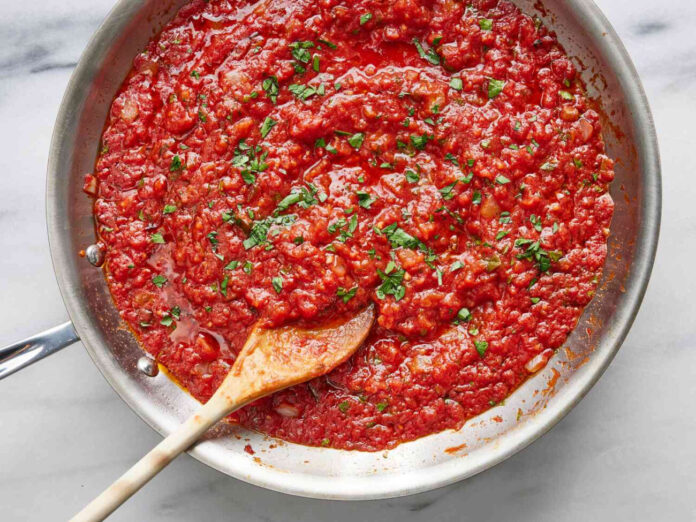
This method is perfect for those who want a fresh sauce in under 15 minutes. Begin by pouring 4 tablespoons of extra virgin olive oil into a large sauté pan set over medium-high heat. Once the oil is hot, crush 3 garlic cloves and sauté them until they just begin to brown. At this point, add finely chopped parsley to the pan.
Next, turn the heat to high and add 28 ounces of whole tomatoes or purée. Cover the pan for about 30 seconds to contain the initial splattering. Stir the sauce with a wooden spoon, then lower the heat slightly to maintain a lively simmer. Add 1½ teaspoons of sea salt at this stage.
Allow the sauce to simmer uncovered for 5 to 7 minutes, stirring often to prevent sticking. The sauce is ready when it thickens noticeably but remains pourable. Finally, turn off the heat and add torn fresh basil leaves, preserving their vibrant color and aroma.
Long Simmer Method for Rich, Deep Flavors
This method allows for deeper flavor development. Start by sautéing finely chopped onion in 4 tablespoons of olive oil until soft. Then, add crushed garlic and continue to sauté for another 1-2 minutes. Next, introduce passata or crushed tomatoes, along with chopped carrots, celery, and a pinch of dried herbs.
Pour in a glass of water and add rock salt to taste. Cover the pot and let it simmer on medium-high heat for 40 minutes, stirring every 5 to 8 minutes to prevent sticking. This longer cooking time enhances the flavors, creating a rich sauce that pairs beautifully with pasta.
Tips for Achieving Chunky or Smooth Texture
For a chunky sauce, crush whole canned tomatoes by hand or with a wooden spoon during cooking. This leaves visible pieces that add rustic character. If a smooth sauce is desired, use an immersion blender directly in the pot after cooking, or start with tomato purée for a silky consistency.
| Method | Time | Texture |
|---|---|---|
| Quick Cook | 5-7 minutes | Fresh and light |
| Long Simmer | 40 minutes | Rich and deep |

Cooking Tips and Common Mistakes to Avoid
Cooking a flavorful sauce requires attention to detail and an understanding of common pitfalls. Knowing how to manage heat and simmering time is crucial for achieving the perfect consistency and flavor.
Managing Heat and Simmering Time
Correctly managing heat is critical. The sauce should maintain a lively simmer, with small bubbles breaking the surface. A violent boil can lead to scorching, ruining the flavor.
For the quick cook method, the total simmering time should not exceed 7 minutes. Extended cooking will over-reduce the sauce, concentrating flavors unpleasantly. When using the long simmer method, keep the lid on and stir every 5 to 8 minutes. This prevents the tomatoes from sticking to the bottom of the pot and developing a burnt taste.
Avoiding Excessive Sugar and Overcooking
A common mistake is adding sugar unnecessarily. High-quality canned tomatoes, particularly San Marzano varieties, contain enough natural sweetness to balance acidity without any added sugar. If the finished sauce tastes slightly acidic or bitter, a very small pinch of sugar can be used as a corrective measure, but it should never make the sauce perceptibly sweet.
Overcooking the sauce until it becomes a thick paste is another frequent error. The sauce should remain fluid and coat the back of a spoon without being gluey. Proper cooking time is essential for maintaining the desired texture.
Enhancing Flavor Without Overpowering Ingredients
Enhancing flavor without overpowering the sauce means using restraint with dried herbs. Dried oregano, for example, should complement rather than dominate the fresh tomato taste. Salt should be added gradually and tasted after each addition, as different brands vary in intensity. It’s easier to add more than to correct an over-salted sauce.
Adding fresh basil only after removing the sauce from heat preserves its delicate flavor compounds, which can be destroyed by prolonged exposure to high temperatures. Using a pan that is too small can cause overcrowding and steaming rather than simmering. A wide sauté pan or appropriately sized pot is recommended for proper evaporation.
Lastly, reserving a cup of pasta cooking water before draining provides a starchy liquid that can be added to the sauce if it becomes too thick. This improves texture and helps the sauce adhere to pasta.
Serving Suggestions and Pairing Ideas
Pairing a freshly made sauce with various dishes enhances the overall dining experience. This sauce is incredibly versatile, making it a perfect match for a wide range of foods.
When it comes to pasta, the most traditional way to serve this sauce is by tossing it directly with al dente pasta in the sauté pan. This method allows the starch from the pasta water to help the sauce cling to every strand, ensuring a flavorful bite.
In Italy, pasta is typically served in warmed bowls rather than on flat plates. This keeps the dish hot longer and makes it easier to twirl long noodles without creating a mess. Mixing the pasta and sauce in the pan results in a more integrated dish compared to the American practice of spooning sauce on top.
Using Italian Tomato Sauce With Pasta, Pizza, and Meatballs
This sauce pairs beautifully with various pasta shapes, from long strands like spaghetti and linguine to short cuts like penne and farfalle. Beyond pasta, it serves as an excellent base for homemade pizza. Spread it over dough and top with fresh mozzarella and basil for a classic Margherita.
Meatballs simmered in the sauce absorb its richness, creating a hearty meal. This dish can be served with crusty bread or over a bed of polenta for a comforting experience. Additionally, the sauce is perfect for baked dishes like chicken parmesan and lasagna, where its bright flavor cuts through the richness of cheese.
Optional Garnishes and Cheese Pairings
When it comes to cheese pairings, a light dusting of freshly grated Parmigiano Reggiano DOP or Pecorino Romano DOP can be offered. However, many prefer to enjoy the delicate flavor of the sauce without strong cheese. Simple garnishes like fresh basil leaves, a drizzle of extra virgin olive oil, or a pinch of red pepper flakes can elevate the dish’s appearance and taste.
For a complete Italian-inspired meal, serve the sauced pasta alongside a simple green salad dressed with olive oil and vinegar, complemented by a glass of medium-bodied red wine. Leftover sauce can be repurposed as a dipping sauce for warm, crusty bread, grissini, or roasted vegetables, showcasing its remarkable versatility.

How To Freeze and Store Italian Tomato Sauce
Storing homemade sauce properly ensures that its fresh flavor lasts longer. Freezing is an excellent way to preserve it for future meals. This section will guide you through the best practices for cooling, packaging, and reheating your sauce.
Cooling, Packaging, and Freezing Best Practices
Proper cooling is the first critical step. The sauce must reach room temperature before being packaged for freezing. This prevents condensation and ice crystal formation that can ruin its texture.
Once cooled, transfer the sauce to a freezer-proof container. Glass jars are preferable to plastic, as they avoid potential flavor absorption or chemical leaching. If using glass jars, leave at least an inch of headspace at the top. This space allows the sauce to expand during freezing without cracking the container.
Alternatively, pour the cooled sauce into heavy-duty plastic freezer bags. Remove as much air as possible and lay them flat in the freezer. This method makes for efficient storage and quick thawing.
Each container or bag should be clearly labeled with the date and contents. Frozen sauce maintains optimal quality for approximately six weeks to three months. For the best flavor preservation, refrigerate the sauce until completely cold before moving it to the freezer. This reduces temperature shock and helps maintain quality.
Thawing and Reheating Tips for Maintaining Freshness
When you’re ready to use the sauce, the ideal thawing method is to transfer it to the refrigerator. Let it defrost slowly overnight to preserve its texture and taste. For a quicker option, run the sealed bag or jar under cool running water until mostly thawed. Then, empty it into a saucepan for gentle reheating.
Reheating should be done over low to medium heat, stirring occasionally. If the sauce has thickened excessively during storage, add a splash of water or reserved pasta water to restore its consistency. After reheating, add fresh basil or a drizzle of olive oil to revive the sauce’s bright flavor that may have mellowed in the freezer.
Frozen sauce serves as an excellent base that can be enhanced with additional sautéed vegetables, browned meat, or a pinch of red pepper flakes for a completely new dish. This versatility makes it a great addition to your meal planning.
| Step | Details |
|---|---|
| Cooling | Allow sauce to reach room temperature before packaging. |
| Container Type | Use glass jars or heavy-duty plastic freezer bags. |
| Labeling | Clearly label with date and contents. |
| Thawing | Defrost in the refrigerator overnight or under cool running water. |
| Reheating | Heat over low to medium heat, adding water if needed. |
Conclusion
Whipping up a vibrant sauce in your kitchen can transform simple ingredients into extraordinary dishes. This rewarding skill not only enhances everyday meals but also invites creativity into your cooking. By selecting high-quality tomatoes and fresh herbs, anyone can achieve remarkable flavors in just minutes.
Whether you prefer a quick recipe or a slow-simmered version, the homemade alternative consistently outshines store-bought options filled with additives. As you experiment with textures and variations, you’ll discover endless possibilities for pasta, pizzas, and more.
With proper storage techniques, your homemade sauce will always be ready for a convenient and delicious weeknight dinner. Embrace the simplicity of authentic cooking, and enjoy the satisfaction of sharing your creations with family and friends. Buon appetito!