Ask ten Italian cooks what pan they use for risotto and you’ll get answers ranging from a battered aluminum casseruola handed down from a grandmother to a heavy copper pot that costs more than a weekend in Bologna. The honest answer is that risotto is less fussy about brand than people think and much fussier about geometry and heat than most home cooks realize.
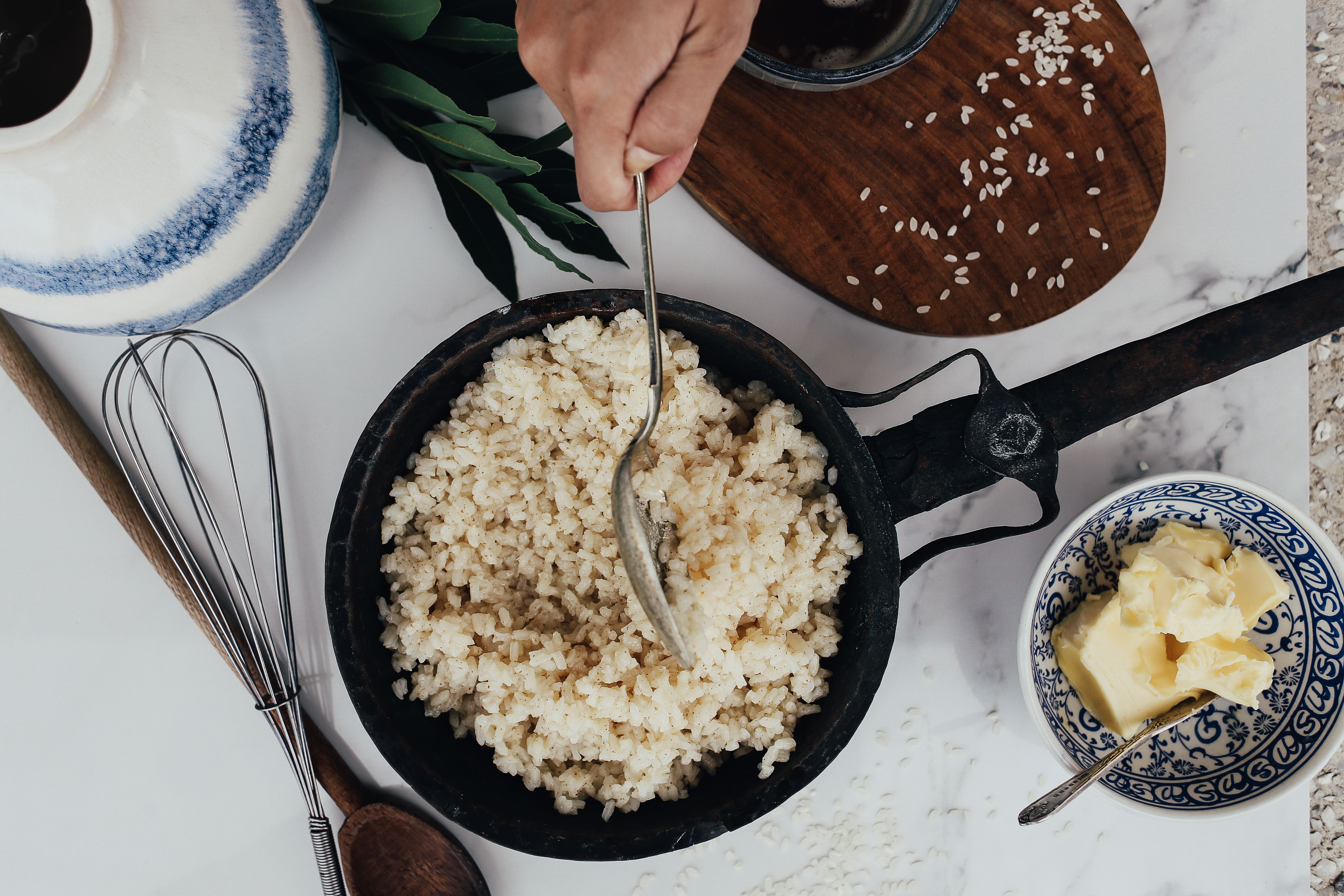
Risotto is a technique, not a recipe. You toast the rice, add hot stock in stages, stir almost constantly, and coax starch out of the grains until the whole thing moves in a slow wave when you shake the pan. Every one of those steps puts a specific demand on the cookware.
So the question isn’t which pan is prettiest on the hob. It’s which pan lets you stir freely, heats evenly enough that the bottom layer of rice doesn’t scorch while you’re distracted, and responds fast when you need to drop the heat.
Why Pan Shape Decides Your Risotto Before the Rice Goes In
The default instinct is to reach for a wide, shallow frying pan. It seems logical: more surface area, faster evaporation, more room to move the spoon.
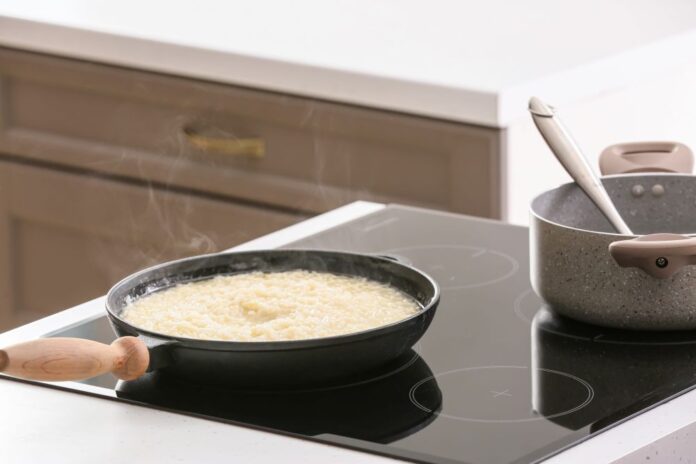
In practice, a skillet is the wrong tool. Its low, straight sides mean stock sloshes over the edge the moment you stir with any energy, and the corner where the wall meets the base traps rice that then sticks and browns.
What risotto wants is a wider cooking surface than a saucepan offers, combined with sides tall enough to contain an actively bubbling, expanding mass of rice. You’re building an emulsion of starch, fat, and stock, not searing a steak. That means the pan has to let you push a wooden spoon through the grains in long, smooth sweeps without fighting a sharp interior angle.
Curved walls do this better than square ones. They guide the rice back toward the center instead of letting it pile up in a ring you have to dig out.
Saucier Versus Saucepan for Stirring and Scraping
This is the distinction worth understanding before you spend anything.
A saucepan has straight sides and a relatively narrow opening. It’s excellent for simmering stock, boiling, and reducing. For risotto it’s workable but awkward, because the narrow mouth limits evaporation and the right-angle base corners collect starch.
A saucier has curved, flaring sides and a wider opening at the top. It was designed for exactly the kind of constant stirring and scraping that risotto demands, and the shape makes the difference obvious within a few minutes of cooking. A 3-quart saucier with a 7-inch cooking surface gives you enough base contact to toast rice properly while the sloped walls keep everything moving toward the spoon.
Wide sauté pans with sloped sides work too. A 12-inch pan with gently angled walls handles risotto for a crowd and doubles as your braising and one-pot pan, which matters if cupboard space is limited.
Tri-Ply, 5-Ply, and Why the Aluminum Core Counts
Risotto scorches from the bottom up. The rice sits in a shallow layer of starchy liquid over direct heat for twenty minutes or more, and any hot spot in the base will brown a patch of grains before you notice the smell.
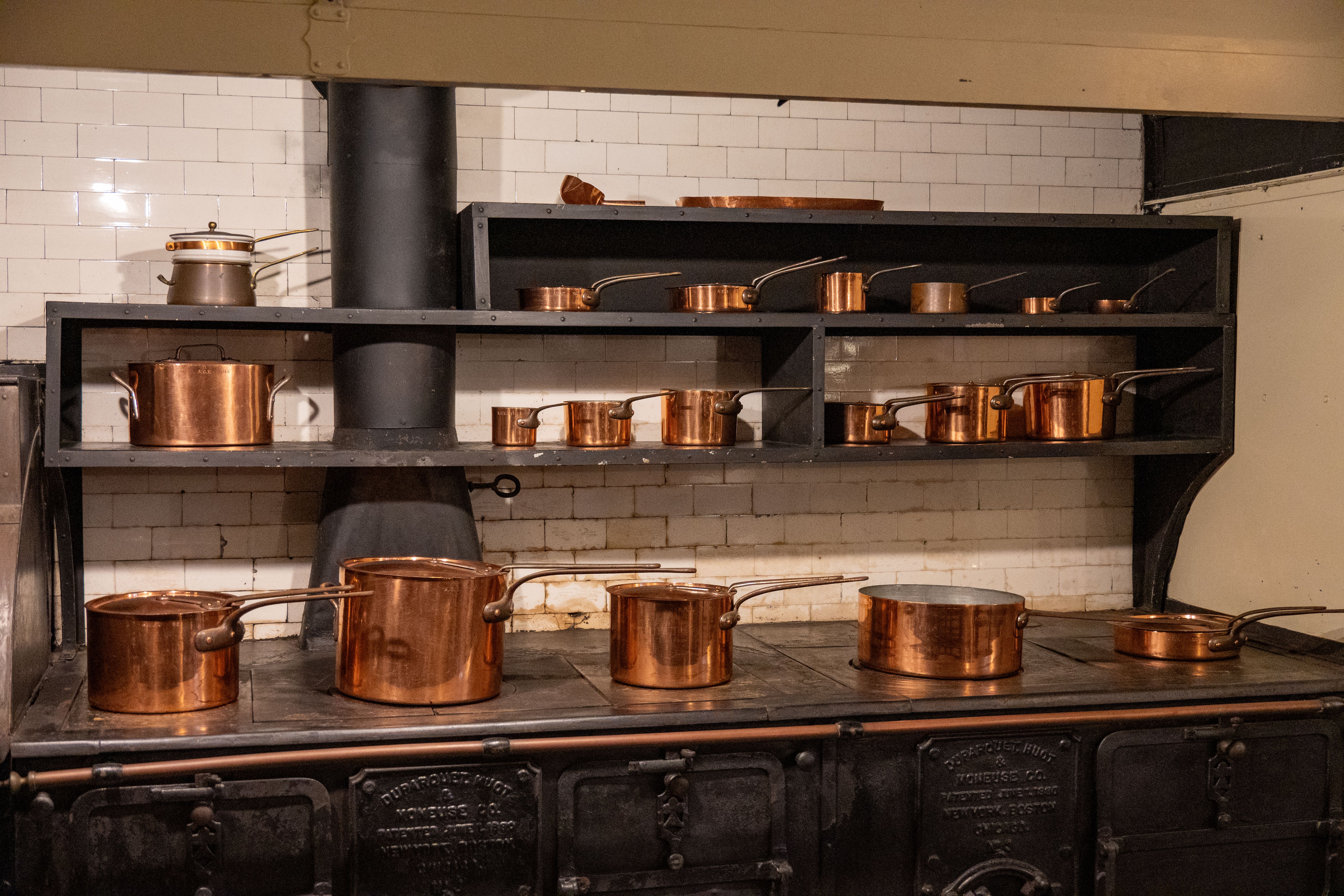
Bonded construction solves this. A tri-ply pan sandwiches an aluminum core between layers of stainless steel; 5-ply adds more layers and more mass. The aluminum spreads heat laterally so the whole base runs at roughly the same temperature, while the steel exterior gives you induction compatibility and a surface that takes a scrub.
Thickness matters more than most people assume. A thin aluminum disc heats quickly but unevenly, which is why lightweight budget pans need you to hover over the dial, while a substantial core is slower to warm up and far more forgiving once it gets there. Core thickness, side slope, and base diameter vary wildly between pans that look identical in a catalog photo, and a side-by-side breakdown like the best pan for risotto spells out those differences in inches and millimeters rather than marketing copy.
Cast iron and carbon steel come up constantly in restaurant discussions, and for good reason: they hold heat beautifully and build a seasoned surface over time. The trade-off is responsiveness. When your risotto is three minutes from done and you need the heat to drop now, cast iron keeps cooking. For home kitchens, bonded stainless gives you better control with far less maintenance.
Capacity: Matching the Pan to How Many You Feed
Risotto expands. The rice roughly triples, and the mixture bubbles actively through most of the cook, so a pan filled to the brim at the start will spit stock across your hob by the end.
For most households, something in the 2.5 to 4.5-quart range covers it:
- Around 2.5 quarts suits a family dinner for four to six people with comfortable headroom.
- Roughly 3 quarts in a saucier shape is a sweet spot if risotto is a regular weeknight dish rather than an occasion.
- A 4.5-quart pan, typically around 11 inches across and close to 3 inches deep, handles gatherings and batch cooking.
- An 8-inch pan works for one or two portions, or for testing a new variation before committing.
Err toward slightly larger than you think you need. An underfilled pan is a minor inconvenience; an overfilled one makes a mess and forces you to stir timidly, which is the opposite of what the dish requires.
Stainless, Hybrid Nonstick, and the Cleanup Question
Bare stainless steel needs a little technique. Heat the pan, add your fat, let it shimmer before the rice goes in, and the surface behaves far better than its reputation suggests. Over years of use, with that habit in place, a good stainless pan releases risotto more readily than people expect and lasts for decades.
Cleanup is the usual objection. A short soak and a sponge handles it; the starch that clings to the base softens quickly in warm water.
Hybrid nonstick is the other route. Laser-etched hexagonal surfaces over ceramic coatings, or diamond-infused PFAS-free ceramic over a tri-ply base, give you release from day one without any seasoning discipline. These hold up to risotto far better than conventional nonstick, because the raised steel structure takes the abrasion from a spoon rather than the coating itself.
A conventional nonstick frying pan will make risotto. It just won’t survive many rounds of it, so treat it as a trial rather than a long-term setup.
Lids, Oven Ratings, and Cooktop Compatibility
Most serious options run on induction, gas, and electric without issue. Oven ratings vary widely, from around 600°F on some bonded stainless pans up to 850 or 900°F on others, which matters if you finish risotto in a warm oven to rest or slide it under a broiler with cheese on top. Budget nonstick pans usually sit well below that.
A lid is more useful than it sounds. Glass lets you watch the rice rest off the heat without releasing steam; a tight stainless lid is better if you ever move the pan into a hot oven.
When a Dedicated Risotto Pan Pays Off
If risotto appears on your table a few times a year, a wide sauté pan or a decent saucier you already own will serve you fine. The cook who gains most from buying for this specifically is the one making risotto weekly, or working through the Milanese, mushroom, and seafood variations in rotation, because that’s when the ergonomics of curved walls and the forgiveness of a thick aluminum core stop being nice details and start saving dinners.